 English

Game Accounts Versus Game Keys in 2026
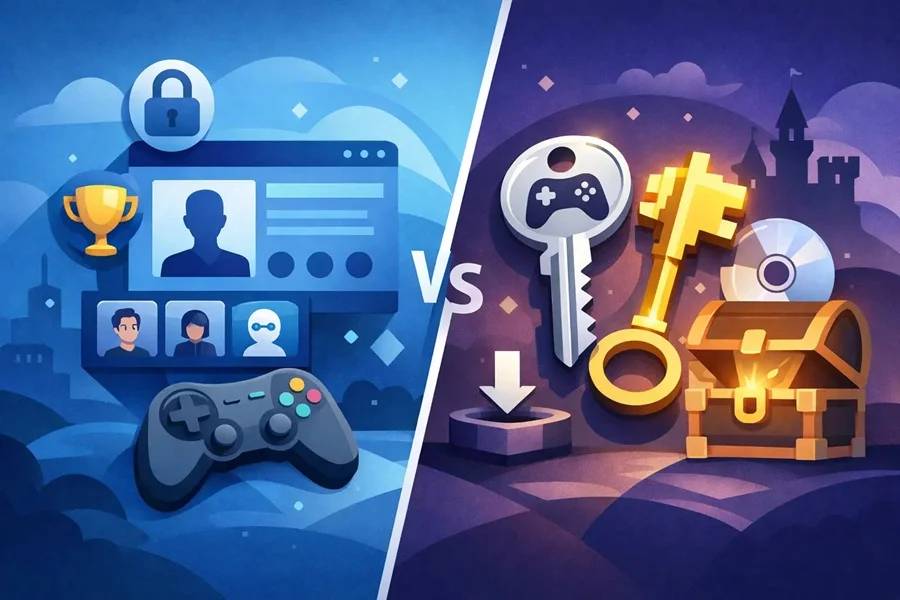
You found a deal, the price looks right, and then the product type makes you stop. Is it a game key, or is it a game account? That is the real question behind game accounts versus game keys, and the answer matters because these two products are not interchangeable, even when they seem to get you to the same game for less.
For deal-focused buyers, the difference comes down to more than price. It affects how you activate the product, what kind of access you get, how much control you have after purchase, and what kind of risk you are taking on. If you want the cheapest option, the fastest delivery, and the fewest headaches later, you need to know exactly what you are buying before checkout.
Game accounts versus game keys: what is the difference?
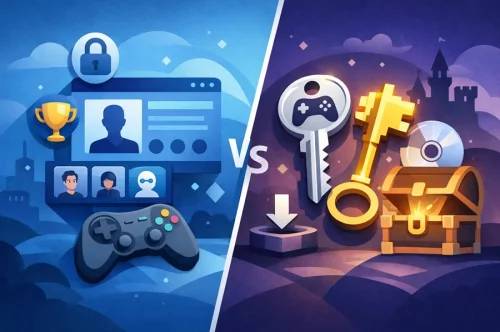
A game key is usually a redeemable code for a platform such as Steam, Xbox, PlayStation, EA App, Epic Games, Battle.net, Rockstar, GOG, or Microsoft Store. You enter the code into your own account, and the game is added to your library if the key is valid for your platform and region. In most cases, this is the cleaner and more familiar option because the game ends up attached to an account you already control.
A game account is different. Instead of receiving a code to redeem on your personal profile, you receive login access to an account that already has the game on it. Sometimes that account includes a single title. Sometimes it includes extra games, skins, progression, or subscriptions. The lower price can be appealing, but the buying experience is different from a standard key purchase.
That distinction sounds simple, but it changes almost everything about the transaction.
Why game keys are usually the safer pick
If your goal is straightforward ownership on your own profile, game keys usually make more sense. You redeem the code, the game lands in your account, and from there it behaves like any other digital purchase already in your library. You keep your friends list, your saves, your achievements, and your usual platform setup in one place.
That convenience matters more than people think. With a key, there is less friction after delivery. You do not need to manage separate credentials, wonder whether account details might change later, or keep track of where one title lives. For players who buy often, that cleaner setup is worth paying a bit more.
Keys are also easier to understand from a support perspective. If the code does not work, the issue is usually clear: wrong region, duplicate use, expired listing details, or platform mismatch. Those are still problems, but they are easier to identify and resolve than account-related disputes.
For buyers looking at a marketplace with lots of offers, game keys are generally the best fit when you want speed, simplicity, and fewer long-term concerns.
When game accounts can look like the better deal
Game accounts often win on upfront price. That is the main reason they exist in the market and the main reason buyers consider them. If a new release is expensive as a standard key but available as an account for much less, the value gap can be hard to ignore.
They can also appeal to buyers who care less about permanent library building and more about cheap access. Maybe you want to play a single campaign once, test a game before committing to a full-price version, or access an account that already includes bonus content. In those situations, a game account can look efficient.
There are also cases where an account includes more than one product. You may see bundles with multiple games, premium editions, starter packs, or extra in-game items already attached. On pure sticker price, that can beat buying every item separately as keys.
But cheap access and clean ownership are not the same thing. That is where many buyers make the wrong comparison.
The trade-off: access versus control
The biggest difference in game accounts versus game keys is control. A key usually gives you direct activation on your personal platform account. A game account gives you access to someone else’s account credentials, or to an account created specifically for resale, with the game already inside it.
That means the account product can come with limits. You may need to follow a specific login method. You may need to avoid changing certain details. The product may work perfectly, but it may not feel as natural as owning the game on your main account.
This is why some buyers are happy with accounts and others regret the purchase immediately. If you only care about getting into the game at the lowest possible price, the trade-off may feel acceptable. If you care about a permanent library, one-click convenience, and personal control, the lower price may stop looking like a bargain.
Game accounts versus game keys for PC and console buyers
On PC, keys are often the easier option because most players already have an established Steam, Epic Games, EA App, Battle.net, or Rockstar account. Redeeming a key on your own profile fits how PC gamers normally buy and organize their libraries. The game appears where you expect it, and you keep everything tied to your own ecosystem.
PC game accounts can still be attractive for expensive titles, deluxe editions, or games you only plan to play short term. The catch is that PC players also tend to care more about launcher convenience, cloud saves, account security, and keeping their entire collection under one login. That makes keys the better long-term fit for many of them.
On console, the choice can feel trickier because buyers are often comparing not just price, but also family sharing setups, subscriptions, and account-based access habits. Even so, the same rule applies. If you want the game attached to your own Xbox or PlayStation profile, a key or direct code-style product is cleaner. If you are comfortable following account instructions and mainly want the cheapest access, an account may still appeal.
The right product depends on whether you are optimizing for ownership or cost.
What to check before buying either one
The product page matters more than the discount banner. Before buying, check the platform, edition, activation method, region, and whether the item is a key or an account. Plenty of buyer frustration comes from assuming all digital game products work the same way. They do not.
If it is a game key, confirm where it redeems and whether it is region-free or region-locked. If it is a game account, read the delivery notes carefully and understand what kind of access you are getting. A cheap offer is only a good deal if the setup matches what you actually want.
This is also where trusted support matters. A marketplace with clear product labeling, fast delivery, and responsive support reduces the chance that a low price turns into wasted time. Playnox, for example, competes on exactly those buyer concerns: cheap digital products, broad platform coverage, and a faster path from search to playable access.
Which option is better for most buyers?
For most buyers, game keys are the better default choice. They are easier to redeem, easier to keep organized, and more aligned with how players normally build their libraries across PC and console platforms. If you buy games often, want fewer complications, and care about account control, keys usually deliver better value even when they cost a little more.
Game accounts make more sense in narrower situations. They can be a strong budget option when the price gap is significant, when you only need access rather than long-term library ownership, or when the included content makes the offer unusually competitive. The savings can be real, but so are the trade-offs.
That is the key point many comparison articles miss. This is not just about which option is cheaper. It is about what kind of buyer you are.
The smarter way to think about game accounts versus game keys
If you want the shortest path to a game on your own account, buy a key. If you are chasing the absolute lowest price and accept a different setup, an account can still be worth it. Neither product type is automatically better in every case, and the best deal is not always the one with the smallest number on the page.
A smart buyer looks at the full cost: price, convenience, account control, platform fit, and how likely the product is to match the way they actually play. Buy with that in mind, and you will make fewer mistakes, save more money over time, and end up with digital purchases that feel like wins instead of compromises.