 English

Steam vs Epic Games - Which Is Worth It?
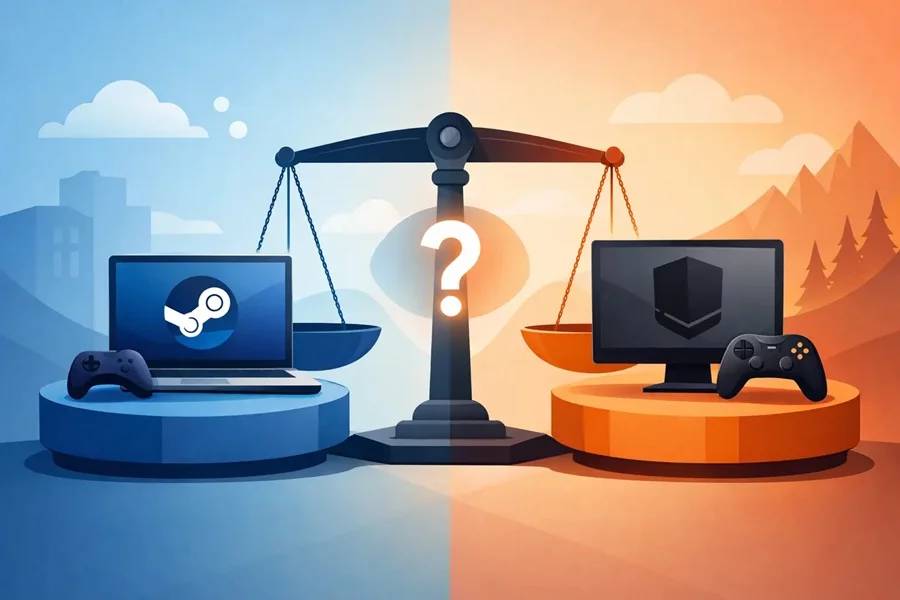
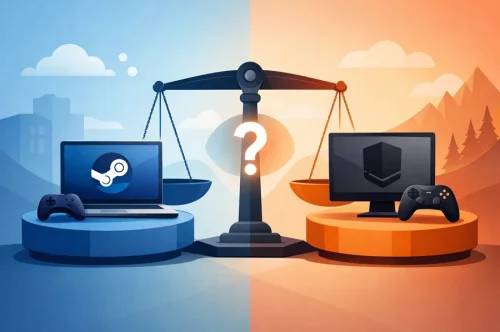
A cheap game is only a good deal if you actually want to use the store that comes with it. That is why steam vs epic games is still a real buying decision for PC players, not just a fan argument. One launcher gives you a huge library, deeper community tools, and better long-term convenience. The other keeps pushing free games, coupons, and aggressive pricing that can cut your total spend fast.
Steam vs Epic Games: the short answer
If you want the most complete PC gaming platform, Steam is still the better overall pick. It has the bigger catalog, stronger social features, better controller support, cleaner library management, and more mature user tools. If you care about workshop mods, community reviews, achievement hunting, or just keeping everything in one place, Steam wins on everyday usability.
Epic Games is the better pick if your main goal is spending less. Free weekly games, seasonal coupons, and occasional exclusive launches make it hard to ignore for value-focused buyers. If you do not care much about profiles, badges, forums, or advanced features, Epic can be the cheaper way to build a solid PC library.
That is the real split. Steam usually wins on platform quality. Epic often wins on raw deal potential.
Store pricing and discounts
For most deal-seekers, this is where the comparison starts.
Steam runs big seasonal sales with huge catalog depth. The Summer Sale, Winter Sale, publisher weekends, and daily promotions make it easy to catch older AAA games, indies, DLC, and bundles at low prices. Steam also benefits from sheer volume. Because so many publishers sell there, you usually get more options in more genres at any given time.
Epic takes a different route. Its base pricing is not always lower, but its promotions can be more aggressive. The big draw has been storewide coupons during major sales, plus the steady stream of free games. If you are patient and selective, Epic can save you more money on individual purchases than Steam.
There is a trade-off, though. Steam deals feel more consistent across the year. Epic deals can feel more event-driven. If you miss a coupon window, the pricing advantage may disappear.
For buyers who regularly compare storefronts and key marketplaces, the smartest move is not blind loyalty. It is checking where the best final price is, then deciding whether the platform trade-off is worth it.
Game library and exclusives
Steam has the larger ecosystem by a wide margin. That matters because selection affects value. Even if Epic discounts a game harder, Steam usually gives you more alternatives in the same genre, more indie discovery, and a better chance of finding older titles, niche games, and utility software.
Steam is also stronger for early access, smaller developers, and games with long tails. Many PC players build their main library there simply because almost everything ends up on Steam sooner or later.
Epic has improved its catalog, but the store still feels narrower. Its biggest weapon has been exclusives and timed exclusives. If a new release lands on Epic first, you may not have much choice if you want to play at launch on PC.
Whether that matters depends on your buying habits. If you mostly play big multiplayer games, current AAA releases, or whatever is free this month, Epic can cover more of your needs than people assume. If you like strategy games, simulation titles, mods, older PC staples, or browsing deep sale pages, Steam is much stronger.
Features, launcher quality, and daily use
This is where Steam builds its lead.
Steam is more than a checkout page. It has community reviews, guides, user profiles, forums, cloud saves for many games, Remote Play, family features, the Workshop, a mature overlay, broad controller support, and a market for certain in-game items. Not every player uses all of that, but the platform feels complete.
Epic is lighter. Some people prefer that. The launcher can feel simpler and less cluttered, especially if you just want to install a game and play. But simpler also means less capable. Community tools are thinner, discovery is weaker, and the ecosystem around each game is not nearly as rich.
The best example is mods. On Steam, Workshop support can make certain games dramatically easier to customize. On Epic, modding often requires more manual effort, and support varies a lot by title. If mod access matters to you, Steam has a clear advantage.
The same goes for controller users and players with mixed libraries. Steam has spent years improving compatibility and user settings. Epic works fine for basic use, but it does not offer the same level of flexibility.
Refunds and customer support
Steam’s refund policy is one of its biggest trust factors. In general, if you request a refund within the allowed time and playtime window, the process is straightforward. That policy makes trying a game feel less risky, especially for lower-budget buyers who cannot afford too many bad purchases.
Epic also offers refunds, and its system is solid enough for standard cases. But Steam’s process feels more established and more familiar to most PC players. That matters because confidence reduces friction at checkout.
Support is a mixed area for both stores. Neither has a perfect reputation. Response quality can vary, and account issues are never fun on any platform. Still, Steam feels more predictable because its systems have been in place longer. Epic has improved, but it still feels like the newer store in customer service terms.
Social features and community trust
Steam’s review system is not flawless, but it helps buyers make faster decisions. User reviews, playtime visibility, discussion boards, guides, screenshots, and profiles create a stronger sense of trust around each purchase. You can usually tell whether a game is active, broken, abandoned, or worth waiting on.
Epic is more limited here. If you like researching before you buy, Steam saves time because so much information is built into the store page and surrounding community. Epic can feel thinner, which means you may need to look elsewhere before spending.
That does not make Epic bad. It just makes it less useful as an all-in-one decision platform.
Which store is better for free games?
This one is easy. Epic wins.
Its free game program has been one of the most effective customer acquisition moves in PC gaming. Over time, players can build a surprisingly strong library without paying much at all. If your budget is tight, Epic deserves a place on your PC for that reason alone.
Steam does have free-to-play games and occasional promotions, but it does not compete with Epic on regular free premium game giveaways. For students, younger players, or anyone stacking games while waiting for bigger sales, Epic is hard to beat.
Steam vs Epic Games for different buyers
If you buy a lot of games every year, Steam usually makes more sense as your main platform. The better organization, broader feature set, community tools, and larger library make it easier to live with over time.
If you buy fewer games and mostly want the lowest total spend, Epic becomes more attractive. Free titles plus sale coupons can beat Steam on pure affordability, especially if you are not attached to social features.
There is also a middle-ground answer, and for many players it is the right one. Use Steam as your primary library and Epic as your opportunistic deal platform. That gives you the strongest day-to-day experience while still letting you grab exclusives, freebies, and major coupon discounts when they appear.
That hybrid approach is often the best-value setup. It is not about picking a winner for every purchase. It is about knowing when convenience is worth paying for and when a cheaper price is worth the extra launcher.
Final verdict
Steam is the better platform. Epic Games is the better bargain hunter’s backup and sometimes the better place to buy right now.
If you want one store to handle most of your PC gaming life, Steam is still the safest recommendation. It does more, feels more complete, and gives you fewer reasons to regret building a large library there. If you mainly care about cheap games, fast access to free offers, and occasional exclusive releases, Epic deserves serious attention.
For most Playnox readers, the real answer is simple: buy based on total value, not brand loyalty. The best storefront is the one that gives you the right game, at the right price, with a platform experience you will still be happy with six months later.