 English

Nintendo eShop Sale Calendar for Better Deals
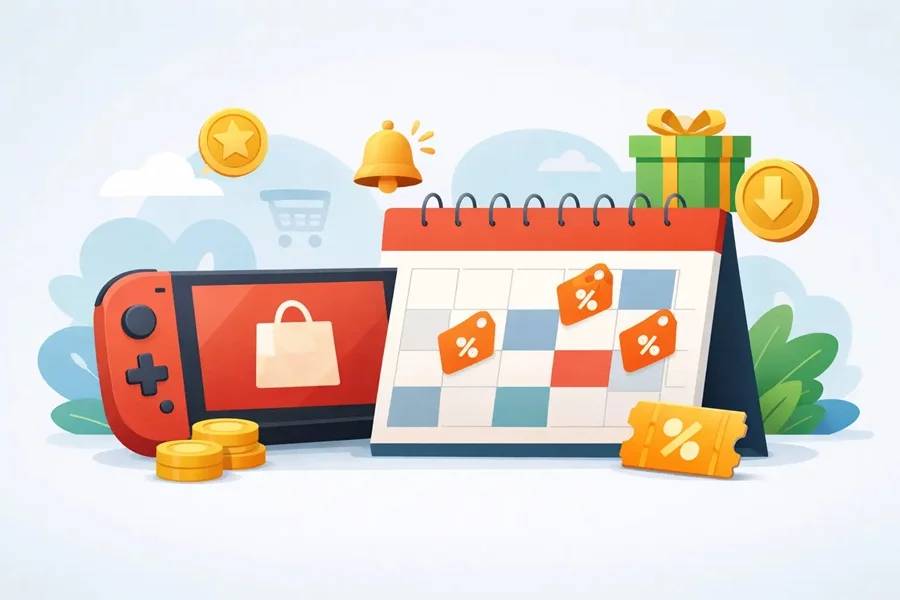
You do not need perfect timing to save money on Switch games, but a good Nintendo eShop sale calendar gets you surprisingly close. If you know when Nintendo usually runs major promotions, when publishers pile on extra discounts, and which months are weaker for first-party cuts, you stop panic-buying at full price and start planning around better offers.
That matters because the eShop is not random, even if it feels that way. Sales rotate constantly, but they tend to cluster around predictable retail moments, seasonal events, and franchise marketing pushes. For anyone trying to stretch a gaming budget, especially if you buy digitally across multiple platforms, knowing the rhythm of Nintendo discounts is more useful than chasing every limited-time banner you see.
How the Nintendo eShop sale calendar usually works
Nintendo does not publish one master annual schedule with every promotion mapped out in advance. What you get instead is a pattern. Big sale windows tend to show up around the same parts of the year, with smaller weekly and publisher-led promotions filling the gaps.
In practical terms, that means you can treat the Nintendo eShop sale calendar as a forecasting tool, not a guaranteed timetable. Holiday promotions, summer sales, spring events, and Black Friday-style offers are common enough to plan around. At the same time, exact start dates, discount depth, and game selection vary by year.
Nintendo first-party games also behave differently from third-party games. If you are waiting on a flagship Mario, Zelda, Kirby, or Pokémon title, discounts may be smaller and less frequent. If you are buying indie games, ports, JRPGs, Ubisoft releases, Capcom collections, or older third-party titles, you will usually see sharper cuts more often.
The best times of year for eShop discounts
The strongest value usually lands in a few dependable windows. Late March often brings spring promotions. June through early July is a common stretch for summer deals, especially when publishers want visibility during a busy release season. November is one of the biggest periods thanks to Black Friday and Cyber Monday pricing. Late December into early January is another strong stretch as year-end and New Year sales kick in.
There are also smaller but still worthwhile moments. You may see publisher anniversaries, franchise celebrations, partner showcases, or genre-specific events create temporary price drops. These can be excellent if you are tracking a specific game rather than waiting for a broad seasonal sale.
A practical month-by-month view
January is often better than people expect. New Year promotions can carry over from late December, and there is usually solid value on third-party titles.
February can be quieter, though smaller themed sales still happen. It is not the month I would count on for the biggest cuts unless a publisher is running its own campaign.
March and April are generally worth watching. Spring sale activity often picks up here, and backlog-friendly games show up at good prices.
May is mixed. Sometimes it acts like a bridge month with decent publisher discounts, but it is not always a headline period.
June and July are strong. Summer promotions make these months reliable for picking up indies, ports, and older AAA releases.
August can go either way. Good for selective deals, less reliable for massive catalog-wide savings.
September is often steady rather than spectacular. You can still find value, especially when publishers rotate older stock digitally.
October starts building toward holiday shopping. Horror games and seasonal picks may get special attention.
November is one of the best months on the entire Nintendo eShop sale calendar. If you are patient, this is one of the clearest times to wait for.
December is also excellent, especially in the second half of the month. If November misses your target game, December often gives you another shot.
Which games are worth waiting for
Not every game should be treated the same way. If a brand-new Nintendo exclusive just launched and demand is high, waiting for a major discount may not pay off quickly. Nintendo has a long history of keeping first-party pricing relatively firm. You might see modest reductions during major campaigns, but not the kind of deep discounts common on PC storefronts.
Third-party games are where timing really pays off. Sports games, anime fighters, Ubisoft open-world titles, remasters, strategy ports, and many indie hits tend to cycle through discounts regularly. Some drop in price within a few months of launch. Others hit a familiar discount floor several times a year.
There is a trade-off here. If you wait too long, you save more money but risk missing the window when a multiplayer community is hottest or when a game is part of the current conversation. If the game is mostly single-player, waiting makes more sense. If it depends on early matchmaking or live content, buying sooner can be worth the premium.
How to use a Nintendo eShop sale calendar without overthinking it
The smartest approach is simple. Build a shortlist, separate your must-play games from your nice-to-have games, and assign a target price to each. Once you do that, the sale calendar becomes useful instead of overwhelming.
For example, if a first-party Nintendo game drops even modestly and you know you want it, that may be good enough. Waiting for an extra few dollars off can mean waiting months. For third-party games, you can be more aggressive. If a title has already seen one or two discounts, chances are good it will return at the same or lower price later.
This is also where deal-focused marketplaces can help if you are comparing digital options more broadly. If a game or eShop credit is available at a better overall value elsewhere from a trusted seller, that can beat waiting for the next official storefront event. The key is to stay focused on verified offers, fast delivery, and safe purchasing rather than chasing suspiciously low prices.
Why some sale periods feel disappointing
A lot of players expect every major eShop event to be packed with must-buy games. That is not always how it works. Some sales are broad but shallow, with lots of smaller indie discounts and fewer standout big-name titles. Others are narrow but strong, especially when one publisher discounts a large part of its catalog.
Your experience also depends on your taste. If you mostly buy Nintendo exclusives, the sale calendar will look less dramatic. If you are open to third-party games, JRPGs, roguelikes, co-op titles, and older ports, the same event can feel much stronger.
This is why it helps to judge sales by your own wishlist, not by the size of the marketing banner. A smaller sale that includes two games you actually want is better than a giant promotion full of titles you will never launch.
Nintendo eShop sale calendar vs impulse buying
Impulse buying is where digital storefronts win. Timers, percentage badges, and rotating homepages make everything feel urgent. A sale calendar flips that power back in your favor.
Once you know that big discount windows tend to come back, the pressure drops. You stop treating every 30 percent cut like a once-in-a-lifetime chance. In many cases, especially for non-exclusive titles, the same game will be discounted again.
That does not mean you should always wait. Sometimes the right call is to buy now because you have time to play now. A cheap game you never start is worse value than a slightly more expensive one you actually finish this weekend. Good deal hunting is not just about the lowest number. It is about timing your purchase around both price and playtime.
A better way to track deals year-round
If you want the Nintendo eShop sale calendar to work for you, think in seasons rather than exact dates. Watch spring, summer, Black Friday, and year-end periods closely. Expect smaller promotions in between. Keep your wishlist tight and your target prices realistic.
It also helps to recognize discount patterns by publisher. Some companies discount constantly. Others hold value longer. After a few months of paying attention, you start spotting which games should be grabbed now and which ones are almost certainly coming back on sale.
For deal-seekers, that habit is more powerful than any single promotion. It lets you buy with confidence, avoid full-price regret, and spend your budget where the value is actually good.
The best part is that you do not need to chase every sale to win. You just need a little patience, a shortlist, and the discipline to wait for the right window instead of the loudest one.