 English

Guide to Nintendo Game Vouchers 2026
You usually know whether Nintendo game vouchers are worth it the moment you spot two $59.99 first-party games sitting in your wishlist. That is where a good guide to Nintendo game vouchers actually matters - not in theory, but at checkout, when you want the best price without guessing.
What Nintendo game vouchers actually are
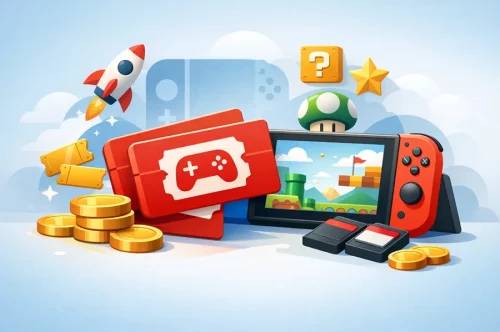
Nintendo Switch Game Vouchers are a bundle deal tied to Nintendo Switch Online. You buy a set of two vouchers for a fixed price, then redeem each voucher for one eligible digital game from Nintendo's catalog. In plain terms, you are prepaying for two games and hoping the games you want cost more than what you paid.
That sounds simple, but the value depends on the exact games you redeem. If you use both vouchers on full-price Nintendo exclusives, the savings are easy to see. If you use them on games that often get big eShop discounts, the math gets weaker fast.
The most common reason people overpay is not misunderstanding the system. It is buying vouchers before knowing what they want to redeem.
Guide to Nintendo game vouchers: how the deal works
To buy vouchers, you generally need an active Nintendo Switch Online membership. Nintendo offers the voucher pack through the eShop, and once purchased, the vouchers sit in your Nintendo account until you redeem them or they expire. That expiration date matters more than most buyers think.
Each voucher can be used on one eligible title. The eligible list usually includes many Nintendo-published games and sometimes major pre-orders, but not every Switch game is included. Third-party games are usually where people get tripped up. Just because a game is popular on Switch does not mean it qualifies.
There is also a timing angle. You can redeem vouchers on games that are already out or, in many cases, on select upcoming releases. If you already know you will buy a new Zelda, Mario, or Pokémon title at launch, vouchers can be one of the cleaner ways to cut the effective per-game price.
When Nintendo game vouchers are worth buying
The best-case scenario is straightforward. You want two eligible Nintendo games that rarely get deep discounts, and both are priced at the top end of the eShop range. In that case, vouchers can give you immediate savings with very little effort.
They also make sense for players who buy digitally by default. If you prefer fast access, no cartridge swapping, and keeping your library attached to your account, vouchers fit that buying style well. You are not changing how you shop. You are just lowering the average cost of premium first-party releases.
Vouchers can also be useful if one of your games is a pre-order. That lets you lock in value now, then redeem the second voucher later for another eligible title. For buyers who already plan their next few Nintendo purchases, that flexibility is a real advantage.
When vouchers are a weak deal
This is where a lot of “cheap” purchases stop being cheap.
If you only want one game, vouchers are usually not the right move. You would be tying up extra money in a second purchase you may not use soon enough. The same goes for buyers who mostly play indie games or third-party releases. Those titles often go on sale more aggressively than Nintendo's own lineup, and many are not voucher-eligible anyway.
Vouchers are also a weaker choice if you are chasing the absolute lowest possible digital price. Sometimes a direct game sale, eShop credit discount, or marketplace deal on Nintendo gift cards gives you better overall value. It depends on the game and timing.
Expiration is the other catch. A voucher that expires unused wipes out the whole point of saving money. If your backlog is huge and your buying habits change every month, prepaying can backfire.
Which games make the most sense for vouchers
The strongest voucher picks are usually Nintendo's premium titles - the games that hold their price for a long time and still sell well at full price. Think flagship releases, evergreen multiplayer games, and big first-party launches that stay relevant for years.
A pair like The Legend of Zelda and Super Mario Bros. Wonder tends to make more sense than mixing one premium exclusive with a cheaper title you could grab during a seasonal sale. The wider the gap between the voucher value and the games' normal selling price, the better the deal looks.
If you are unsure, build a simple test. Ask yourself whether you would happily buy both games this month at their current eShop prices. If the answer is yes, vouchers are probably a strong fit. If you are stretching to justify the second game, skip them.
How to calculate the real savings
A practical guide to Nintendo game vouchers should always come back to math. The headline deal only matters if it beats your actual alternatives.
Start with the price of the voucher pack. Then compare that against the total regular price of the two games you want. After that, compare the voucher option against likely sale prices. Nintendo first-party games do get discounts, but often not dramatic ones. Many buyers save more by using vouchers on titles that tend to stay expensive.
You should also factor in the cost of Nintendo Switch Online if you are only subscribing to access vouchers. If you already use Switch Online for online play, cloud saves, or retro libraries, that cost is already justified. If not, it changes the equation.
For example, vouchers look excellent if they let you grab two new $60 games for less than buying both separately. They look less impressive if one of those games regularly drops in price or if you signed up for Switch Online only to access the deal.
Common mistakes buyers make
The biggest mistake is treating vouchers like a universal Nintendo discount. They are not. They are a targeted deal for specific types of buyers.
Another mistake is assuming all major releases are eligible. Always check the current eligible game list before buying. Nintendo updates that list, and not every game you expect to see will be there.
Buyers also forget about opportunity cost. Money tied up in vouchers is money you cannot use on an unexpected sale, DLC, or eShop credit deal. If your budget is tight, flexibility has value too.
Finally, some people buy because they hate missing out. That is rarely smart with digital purchases. If you do not have two real games in mind, waiting is usually the better move.
Better alternatives if vouchers do not fit
If vouchers are not the right play, you still have solid options.
Discounted eShop gift cards can reduce your effective game cost without locking you into voucher-eligible titles. That gives you more freedom across first-party games, indies, DLC, and add-ons. For flexible buyers, that can be the better deal.
You can also wait for eShop promotions, especially on third-party games and smaller releases. Nintendo exclusives usually hold value better, but many publishers discount aggressively over time. If your wishlist leans outside Nintendo's own catalog, patience often beats vouchers.
For deal-focused buyers, the best approach is simple: compare the voucher route against current digital pricing and any trusted marketplace discounts available for Nintendo credit. A “special offer” only matters if it lowers what you were already going to spend.
Should you buy Nintendo game vouchers in 2026?
For the right buyer, yes. If you buy digitally, already have Nintendo Switch Online, and want two eligible first-party games at or near full price, vouchers are still one of the cleaner ways to save on Nintendo releases.
For everyone else, it depends. If you buy one game at a time, mostly play discounted third-party titles, or are unsure what your second voucher would go toward, the value drops fast. Cheap is only cheap when it matches your real buying habits.
The smartest way to use vouchers is not to chase the deal first. Pick the two games first, check eligibility, compare your alternatives, and only then decide. That one habit will save you more than any promo language ever will.
If you treat Nintendo game vouchers like a tool instead of a default purchase, they can be a very solid deal - and if they do not fit, there is no shame in keeping your budget flexible for the next better offer.